Why we film the recruitment video
By Syntax Motion, Vienna. Updated: 4 November 2026
We are an AI video agency. For almost every format we build the images instead of recording them. For one format we do not, and that is the recruitment video. The reason has less to do with principle than with the way applicants watch a film like this.
The question that comes first in every recruitment project
It is almost always worded the same way: can we do this without a shoot? For a commercial the answer is usually yes. A product, a world, a mood, all of that can be built, and nobody loses anything. For a recruitment video the answer is no, not out of principle but because the film would stop doing its job.
A recruitment video answers one question: do I want to work there? Anyone asking it is looking for something very specific in the picture. For faces they will sit across from in an interview. For the room their own desk would stand in. For whether people there talk the way they really talk. None of that can be generated without lying.
Why the answer differs from the commercial
A commercial advertises something you can buy afterwards. Expectation and product meet at the checkout. A recruitment video advertises a workplace, and expectation meets reality on the first day of work. Months can pass in between. If the film showed colleagues who do not exist, that does not surface in the film, it surfaces in the interview. And there it costs trust rather than attention.
There is a craft point on top of that. Invented people become convincing quickly in short shots. In long ones they do not. A statement runs twenty or thirty seconds, looking into the lens, with pauses, with a sentence that restarts halfway through. That is still where you can tell whether a person is speaking or a model is. And that shot is the most important one in a recruitment video.
What happens on the shoot day, and what does not
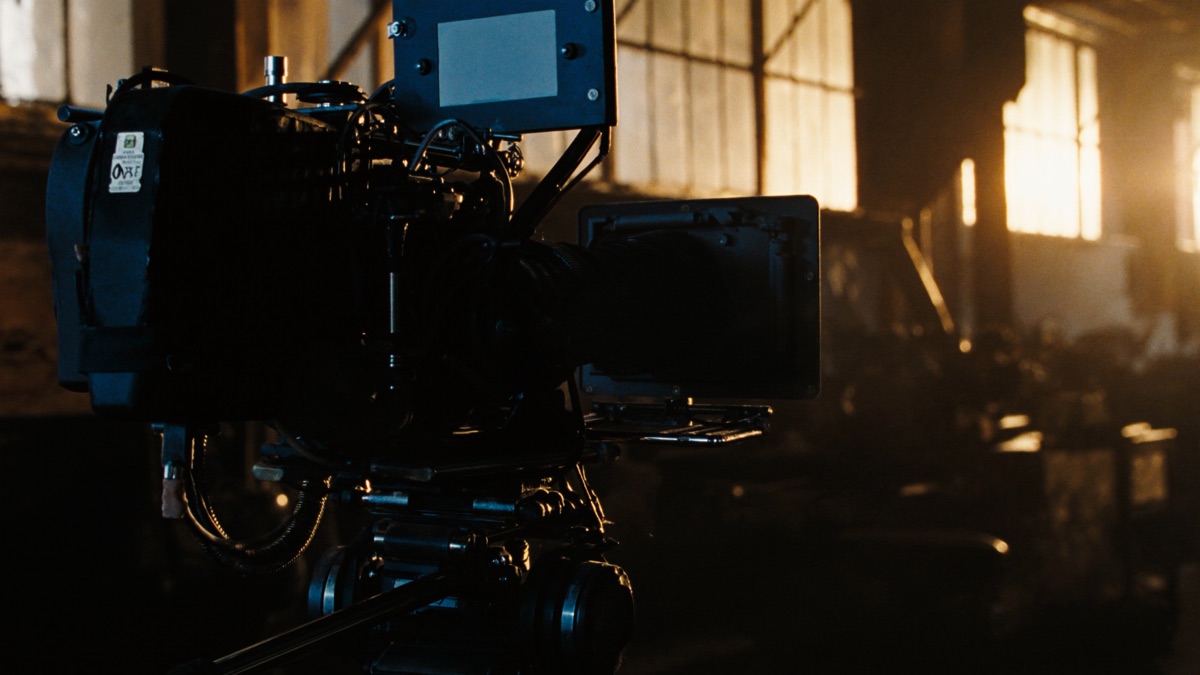
A recruitment shoot looks different from a classic brand film shoot. We do not build a world, we collect what is already there. Statements from staff, ideally in their own words rather than read out. The workshop, the office, the site or the vehicles, the way they actually look. A few team scenes: a meeting, a handover, someone being shown the ropes.
Because the elaborate images come from AI later, a short shoot day is often enough. No week of preparation and no sound stage. That is the real advantage of working in a hybrid way here: the shoot shrinks to what only works for real, and everything else is made afterwards.
What AI carries in a recruitment video
The opening that carries the film before the first person speaks. Images for what a company intends to do and what cannot be photographed yet. Places we are not allowed to enter or that are too far away. Transitions between scenes that would otherwise collide in the edit. And language versions, when a company is hiring in several countries.
These are often the most expensive parts of a classic recruitment film and the first ones to be cut. Making them affordable is why the mixture pays off. Not skipping the shoot altogether.
One shoot, several films
Employer branding video, recruitment video and job video are three different films with three different jobs. They come out of the same material, though. Anyone filming for a day who already knows that a general version for the careers page, one for the technical roles and one for a single vacancy will follow, films differently: more statements, more variants of the same scene, less specialisation.
That is where a recruitment project works out financially or does not. Three films from one shoot do not cost three times as much. Three shoots do.
Where we say no
We do not show invented staff, not as placeholders and not when a company cannot free anyone up right now. We do not place faces into scenes the person was never in. And we do not generate statements nobody made. Where exactly the line between editing and invention runs is set out in our note on the AI testimonial film.
When no shoot is possible at all, we propose a different format rather than a recruitment video without people. Usually that is a brand film, which advertises the company, or an AI training video for onboarding. Neither needs real faces, and neither claims anything.
Frequently asked questions
Can a recruitment video be made entirely with AI?
Technically yes. We do not do it, because the film then shows people who do not work at the company. That surfaces in the interview at the latest, and there it costs trust rather than attention.
How long is the shoot for a recruitment video?
Often a short shoot day, because only what has to be real is recorded: statements, workplaces and a few team scenes. What really moves the effort is the number of locations.
What does a hybrid recruitment video cost?
The base film starts at 3,500 € net. Locations and the number of edits make the biggest difference. The details are on the AI recruiting video page and under pricing.
Do the AI scenes have to be labelled?
The same rules apply to recruitment material as to advertising. What to watch for is set out in the guide on AI labelling.
Read on: All posts • AI recruiting video • AI testimonial video • AI labelling • Pricing
Hiring at the moment?
Then we look at what material already exists and what is missing. A first call takes 30 minutes and costs nothing.
Book a first call